uFactory
The uFactory approach not only reduces reliance on global supply chains and lowers transport emissions but also responds to growing market demands for customization, fostering sustainable urban manufacturing ecosystems.

The uFactory approach not only reduces reliance on global supply chains and lowers transport emissions but also responds to growing market demands for customization, fostering sustainable urban manufacturing ecosystems.

The VisioMAC initiative aims at introducing quality control along the production line of tires. The project was conducted in collaboration with the Michelin site of Cuneo, where we attended to the steps of tire production: mixing and calendaring, extrusion and tissue cutting, carcass assembling, green tire (unvulcanized tire) fabrication, curing, and final inspection.
The AMSHI project aims at contributing to reduce the urban heat island effect, by designing a self-locking paving block with a low degree of embodied energy for public spaces.

The objective of AppDCO2 is to support enterprises with specific applications either in their decision-making process when choosing their tech partner companies or in assessing the impact of their internal applications and finding ways to reduce it.

The ‘Data-Driven Customer Value Systems’ project was conceived as a response to these pressing industry challenges. Our role encompassed a comprehensive examination of the Industry and Market, and the development familias & personas with a specific lens on the 18-30-year-old customer segment, to gain profound insights into customer behaviors, thereby establishing the foundation for innovative service proposals.
Data-Driven Customer Value Systems Read More »

The goal of this project is therefore to develop a comprehensive HEMS, including a control algorithm and a user interface, able to operate with a broad range of devices and achieve previously unattainable performance.

Our project addresses critical challenges in greenhouse cooling by aiming to reduce water consumption, improve sustainability, and enhance performance. Stakeholder analysis guided our approach, and research into materials and experimental activities led to promising alternatives. Our goal is to provide an innovative and sustainable solution that meets the diverse needs of stakeholders, ensures water conservation, and secures the economic viability of greenhouse applications. By focusing on these strategies and technologies, we can contribute to the advancement of sustainable practices in the agricultural sector while addressing the pressing issue of water scarcity.

MetaMAPP II – Reloaded aims to develop a metamaterial-based solution to reduce the noise level inside a car cabin, particularly targeting a specific range of medium-high frequencies.
MetaMAPP II – Reloaded Read More »

Sanlorenzo’s MILDS project represents a significant step forward in leveraging Digital Twin technology to revolutionize the superyacht industry. By integrating data-driven maintenance, energy efficiency services, and a comprehensive DT infrastructure, the company aims to meet the demands of the emerging userrequirements, while delivering exceptional value to its customers.
MILDS – Maintenance, Infotainment, Learning Digital Services Read More »
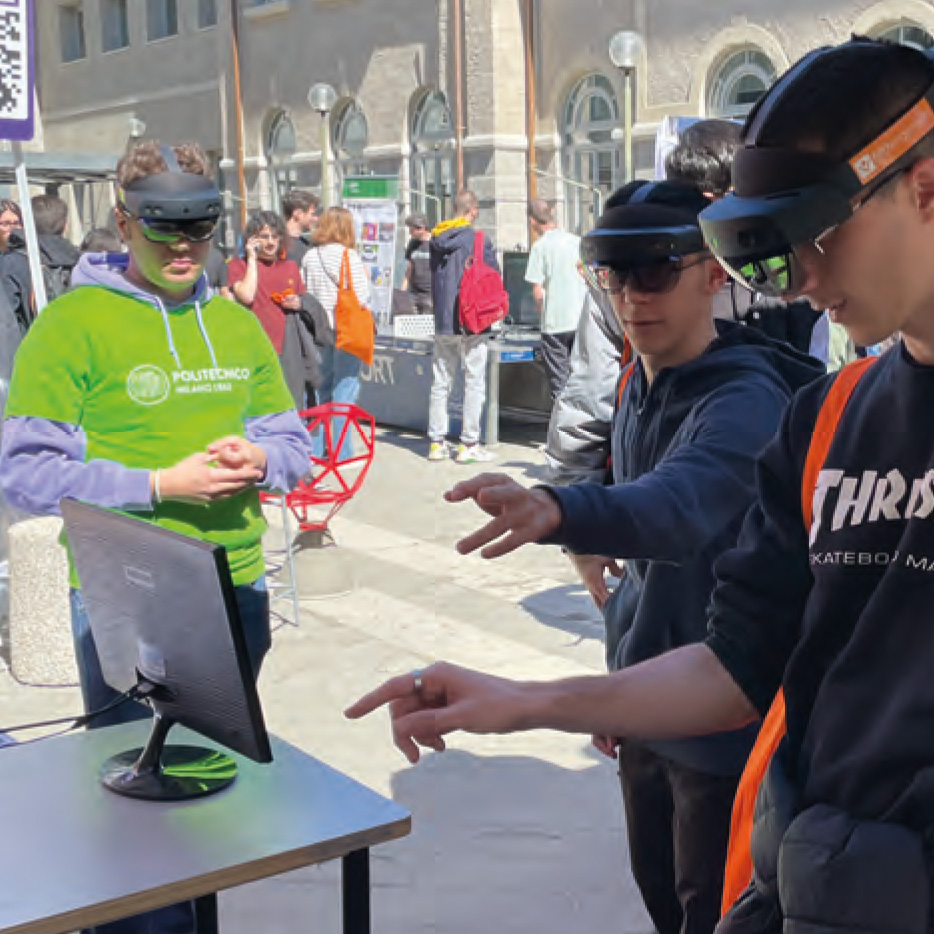
The current landscape of Mixed Reality (MR) applications in Education finds common employment in rendering 3D content in digital spaces. We noticed an unexplored area in the development of 3D-based activities that, combined with 3D content, could lead to comprehensive teaching experiences. Our project, in partnership with Vodafone and FifthIngenium, aims to fill this gap.
MIRE – Mixed Reality in Education Read More »